Global Startup EXPO 2026 · Osaka · 5–7 October 2026
Your technology will need a building
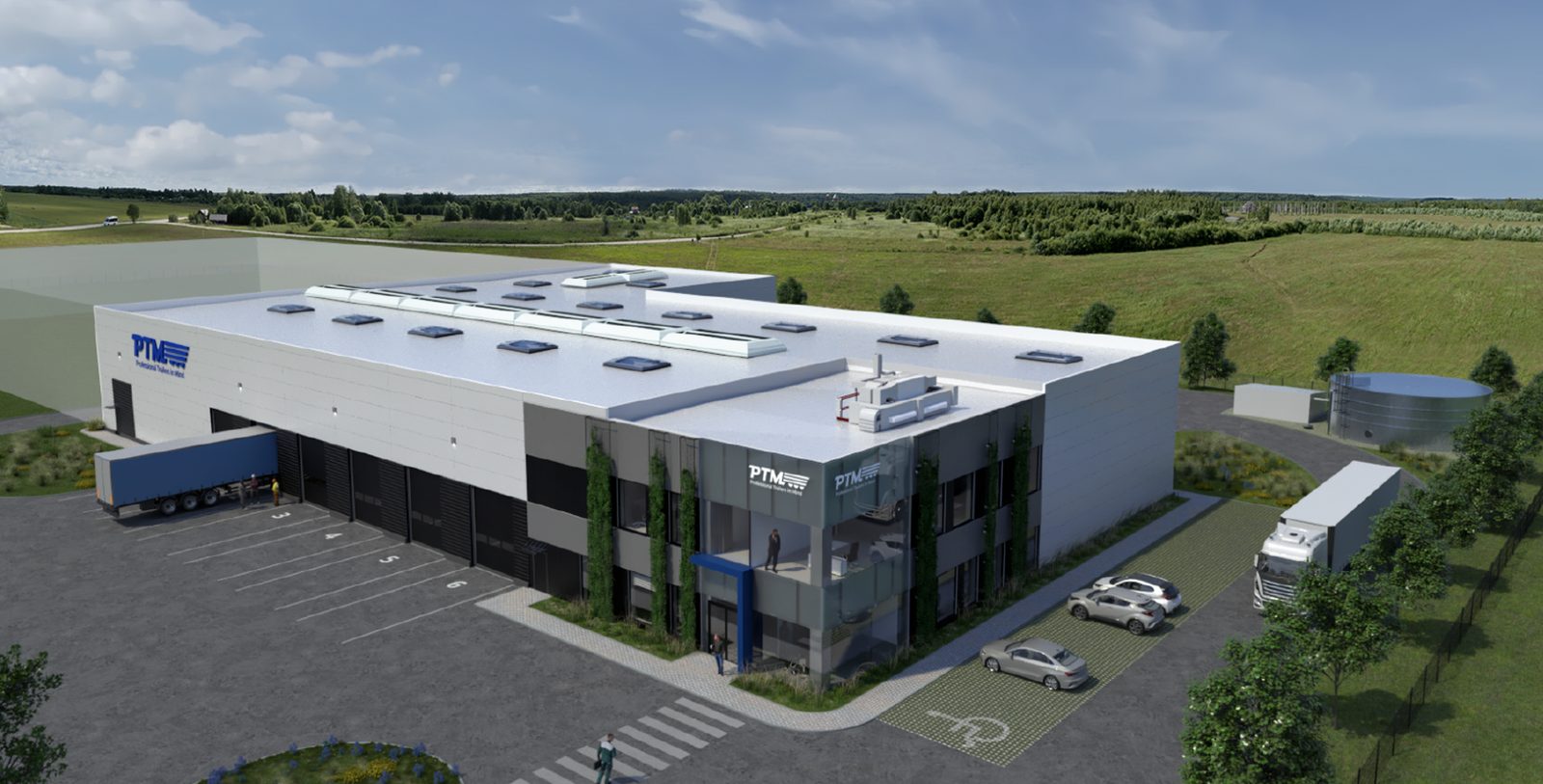
Fusion, semiconductors, robotics, bio and space are physics. Sooner or later they need halls, laboratories, cleanrooms, heavy power connections and permits. We are a Polish architecture and engineering practice — twelve years, around 30 specialists — and that is the part of your growth we plan. We have done it for a Japanese company already: KOKI's first plant outside Asia stands in Poland, and we designed it.
- Practice
- 12 years, around 30 specialists
- Disciplines
- Architecture, engineering, blue-green infrastructure, advisory
- Standards
- UNESCO · UNDP · UN Global Compact
- Base
- Central Europe, working internationally
Why we are at a startup event
From breakthrough to industry — and industry needs a floor plan.
Everyone here treats deep tech as a technology sector. It is — until the day it starts to occupy space. Then it becomes a construction problem: how much land the process actually needs, what the plant will cost to run for the next thirty years, and which permit stands between a decision and the first wall.
Three kinds of company have that problem, at three very different moments. We came to Osaka for all three.
Three conversations
Which one is you?
They need different answers, and we did not come here to give the same one three times.
You are about to build for the first time
A first hall, a first permit, and the real cost of both. At this stage the useful work happens before anyone draws anything: how much land the process actually needs, what the building will cost to run, and which decision locks the other two.
Horizon: two to three years. We would rather be on your list early than pitch you late.
You already produce — and there is no time to think about the next step
Entering a deep-tech supply chain is not a commercial change. It is a physical one: different tolerances, cleanliness class, vibration control, ESD, GMP for bio, hazard zones for hydrogen, different power, different material flow. The hall you have was not designed for any of it.
Three questions we would open with:
- What would have to change in the hall for this contract to be feasible?
- How much more will fit on this plot before you have to move?
- How many times does material pass through the same gate?
You are already looking at Europe
Your customer moved west. Or the supply chain is being pulled out of a single region. Or a contract, a grant or a certification came with a location attached to it.
Whatever brought it on, the site decision is the one that is hardest to reverse. Here we carry the whole thing ourselves: Central European law, procedure, cost reality — and someone who can stand in the room at the authority and put a signature on the drawings.
This is usually the conversation that already has a date on it.
What we promise
You are growing and you need space.
Well-planned space.
Three things decide whether a new plant is a good decision or an expensive one. We work on all three at once, because separating them is what makes projects fail.
The idea
A plant is a business tool first. The layout has to serve the process, the volume and the way material actually moves — not a shape someone liked on a drawing.
But people spend a third of their life inside it. We plan for both: the throughput and the person standing at the machine. A hall that is decent to work in is not a more expensive hall. It is a better-planned one.
The environment
A layout that works with the site instead of fighting it. Water, greenery and ventilation designed in from the beginning — not added later because a permit demands them.
We work to the ecohydrology principles of the UNESCO-auspiced centre and ERCE PAN, and to the sustainable development standards of UNDP and the UN Global Compact.
The costs
What it costs to build and what it costs to run, calculated in variants while the design can still be changed. After the permit it is only expensive.
How we work
How the work is divided
Most contacts made at an event like this one start in the first column and mature into the second. We are useful in both, in different ways — and the difference matters more than the similarity.
Where your plant is now
Site and location analysis, feasibility study, a master plan for the plant, an expansion or relocation concept, CAPEX and OPEX variants, environmental assumptions. This is the work that decides what gets designed later — and the work a local practice rarely does cheaply or willingly.
The first steps we take from here — maps, planning records, a first capacity check. But nothing is settled from behind a screen: during the work, and again before the final variant is chosen, we look at the site together with you, on the ground. It matters that the investment respects what is around it and, at the same time, that the land can actually deliver what the business plan assumes.
Local law and execution are led by a local design and construction partner. Always. We do not hide that, because it is part of the offer. We do not claim to know Japanese, Chinese or Korean building law, and you should not trust a foreign practice that says otherwise.
When you come to Europe
Everything above, plus running the case from end to end: design, administrative procedures, permits, through to construction. Here we are on home ground — Central European law, procedure and cost reality.
This is the moment a supplier follows its customer west, or diversifies a supply chain away from a single region. If that is on your horizon, it is worth saying so early: the site decision is the one that is hardest to reverse.
Where we know the ground
Central Europe —
and one part of it we know street by street
The method travels: Czechia, Germany, Slovakia, Hungary. But when someone asks what building in this part of Europe is actually like, we answer from one region in particular — the one we work in every day, and the one Japanese industry reached first.
Japanese industry is already here
Around twenty Japanese companies employ several thousand people in our region. Daikin built its first Polish plant here — its largest in Europe — around 300 million euro in Ksawerów, with 3,000 jobs planned by 2030. Hitachi Energy, Fujitsu, Nippon Seiki and Fuji Seal are here too.
One of those plants we designed ourselves: KOKI’s. The rest are not our clients — and that is exactly why the fact is worth stating. The precedent is not ours to claim: other Japanese boards took the decision before us, and their plants are running.
One of them came close, though. The building Fujitsu occupies in Łódź obtained its construction permit with our involvement. The investor was somebody else; the permit was our part of it.
Japan is not a cold call for us
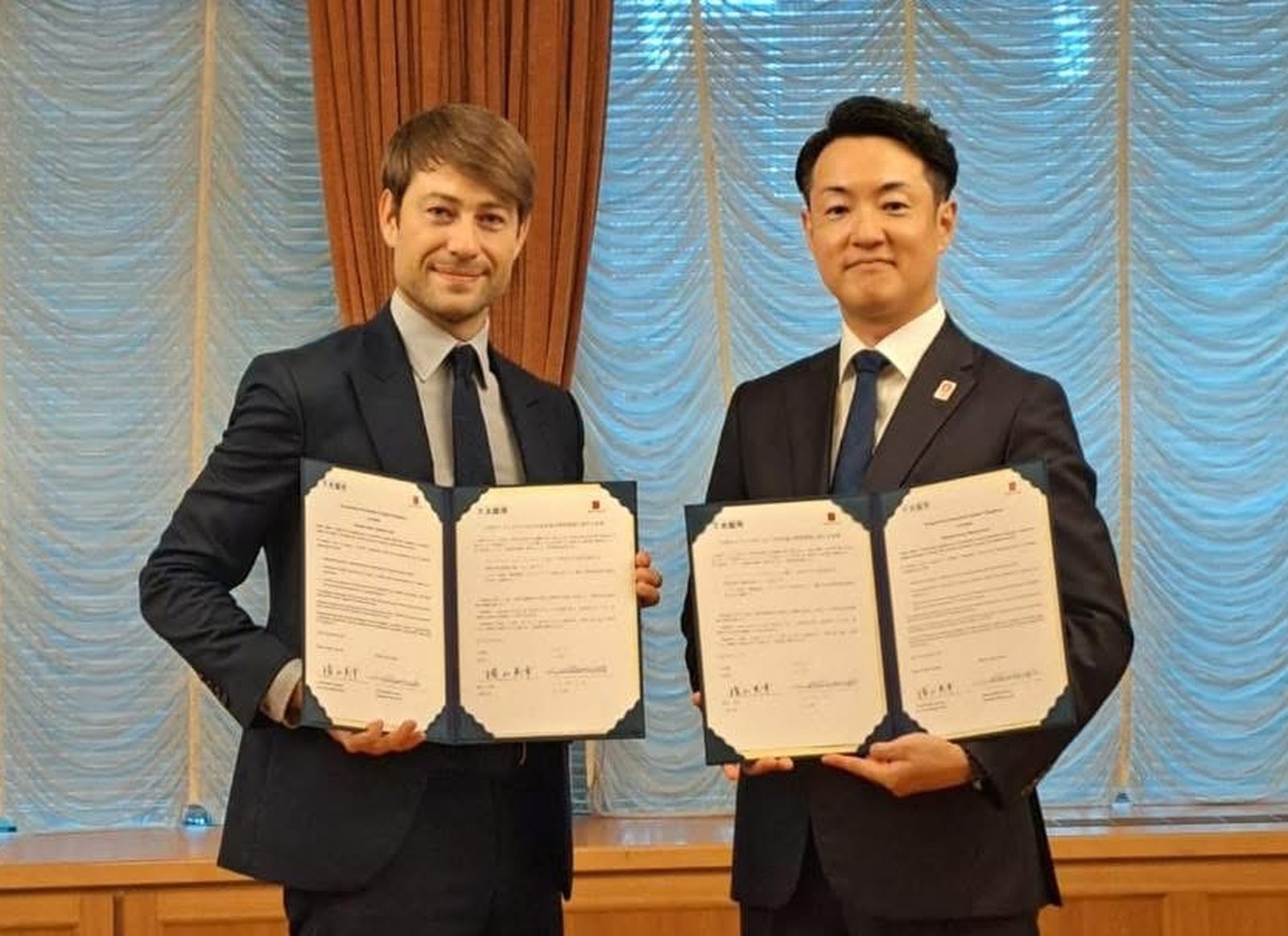
The city of Łódź and Osaka signed a partnership memorandum in 2025 — startups, investment, advanced technology, academic exchange. That is the city's agreement, not ours; we mention it because it is the reason this conversation is easier than it would be anywhere else.
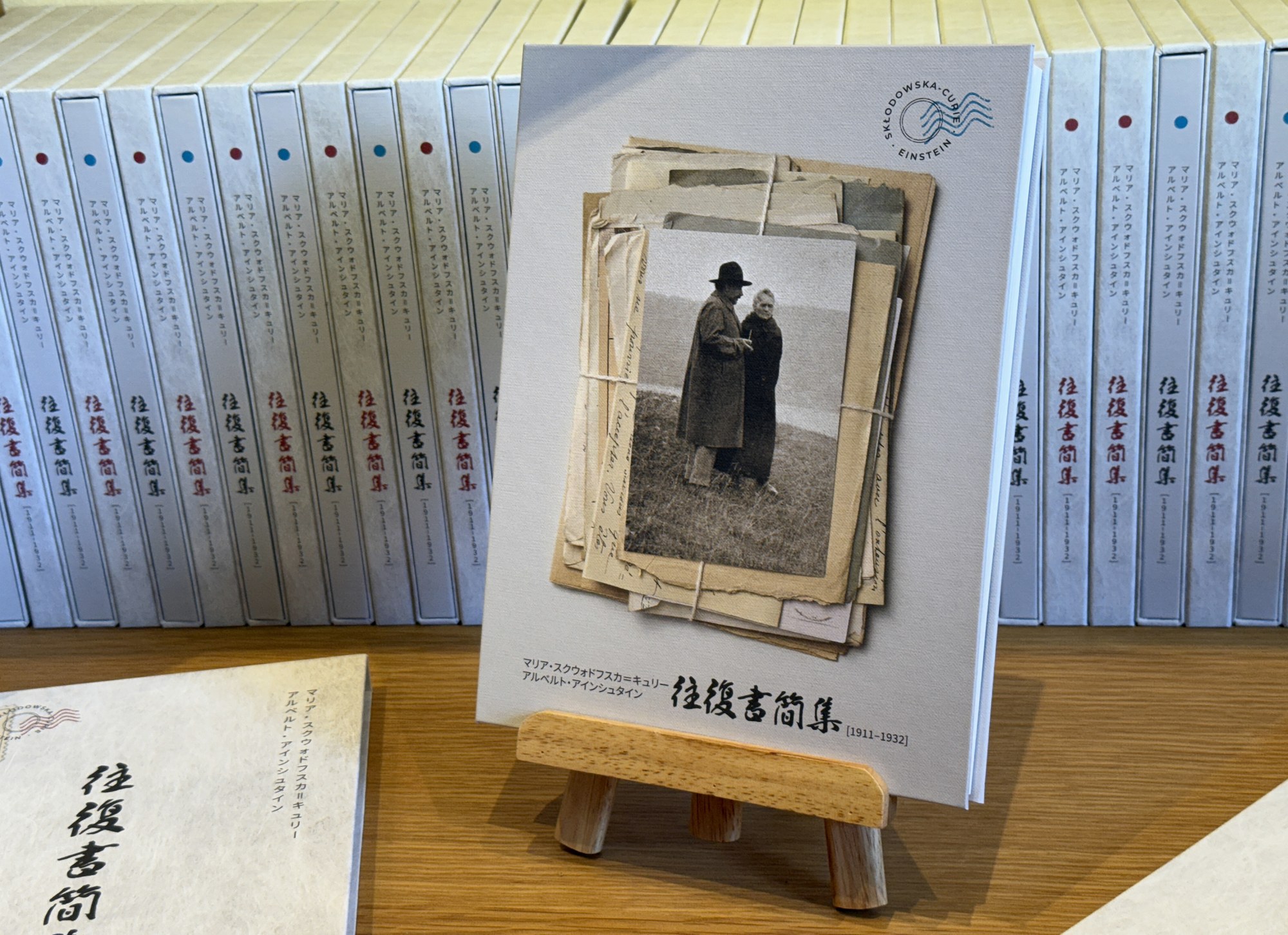
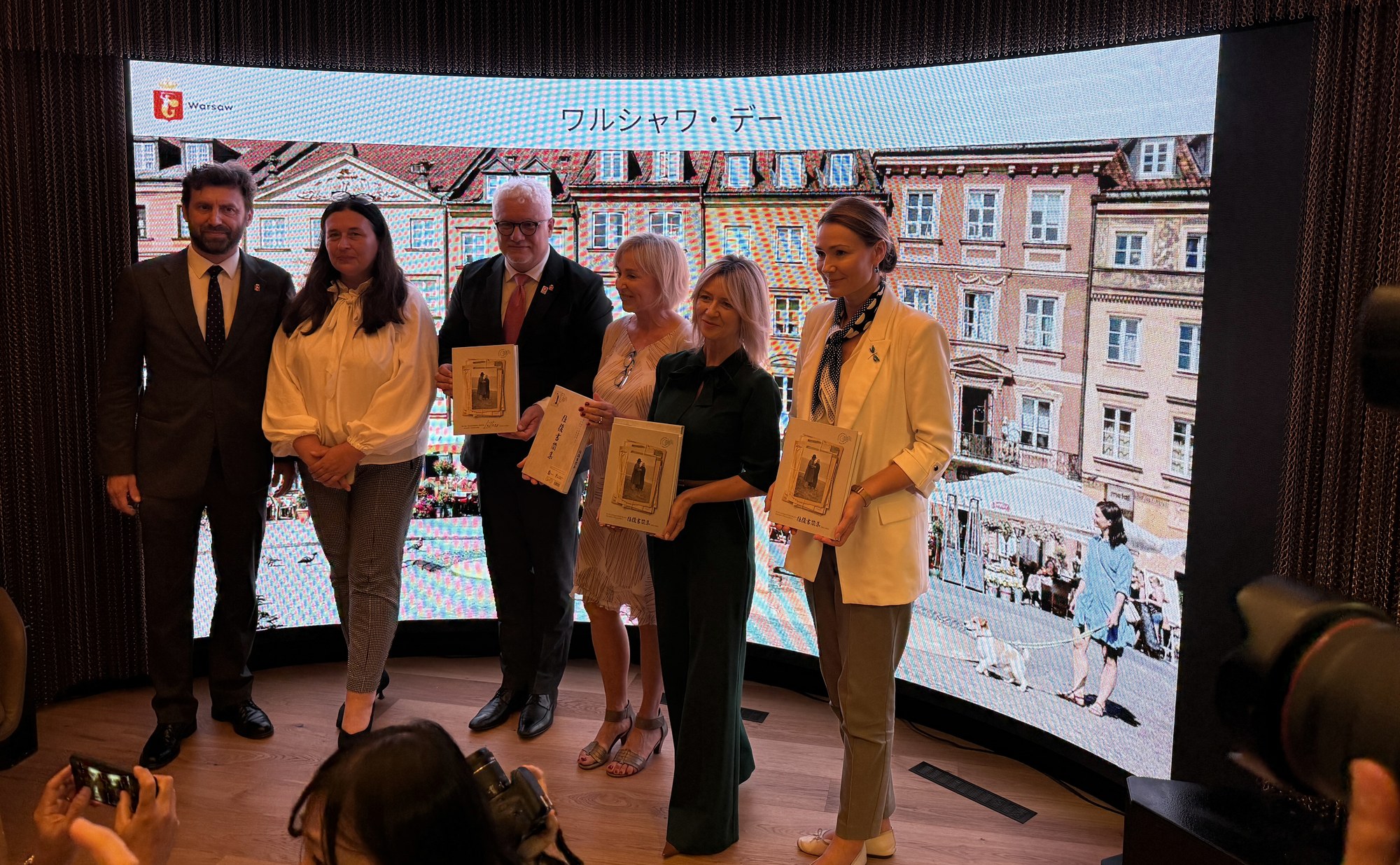
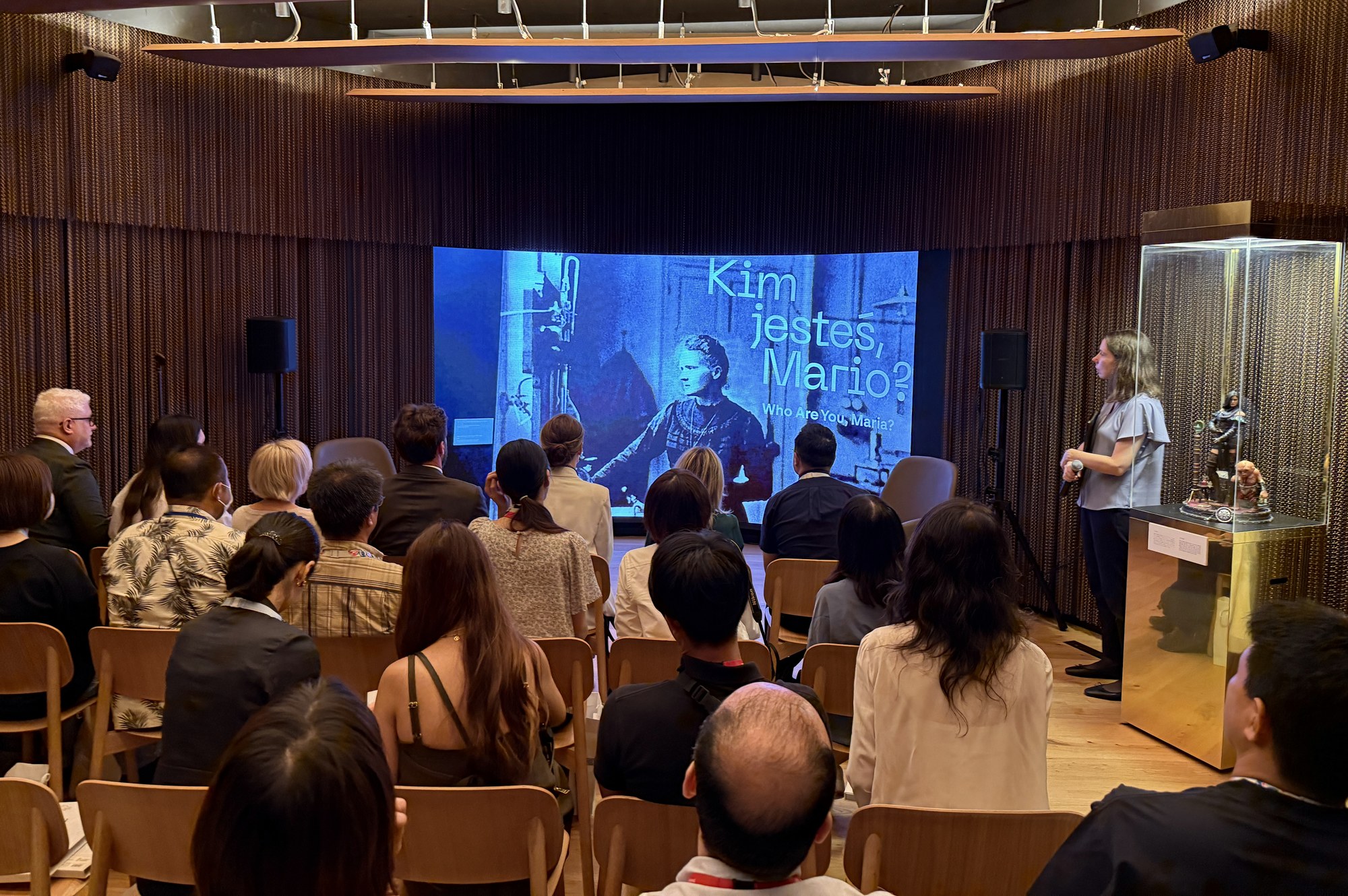
Ours is smaller and more personal. This is our second time in Osaka. In September 2025 we were here for the Japanese release of the correspondence between Marie Skłodowska-Curie and Albert Einstein — the first publication of those letters, which our firm helped fund. This fair itself continues the edition held on the Expo 2025 grounds.
None of that designs a building. It does mean that when we say we want to work with Japanese companies, it is not a sentence written for this fair.
What that means in practice
The geometric centre of Poland, where the A1 and A2 motorways cross, about ninety minutes from Warsaw. A regular rail freight connection to Chengdu and two intermodal terminals — which matters if what you move is components rather than slides.
We will also say the opposite when it is true. If a plant needs something this region cannot give it, we say so and look elsewhere in Europe with you. A location is the one decision that cannot be undone later.
What we do
Five of our eleven areas matter to a company
that is scaling
Our full practice runs from single houses to city quarters. These five are the ones that come into play when a technology company starts building. Where each of them applies is set out above: pre-design work anywhere, the full procedure in Europe.
Investment site analysis
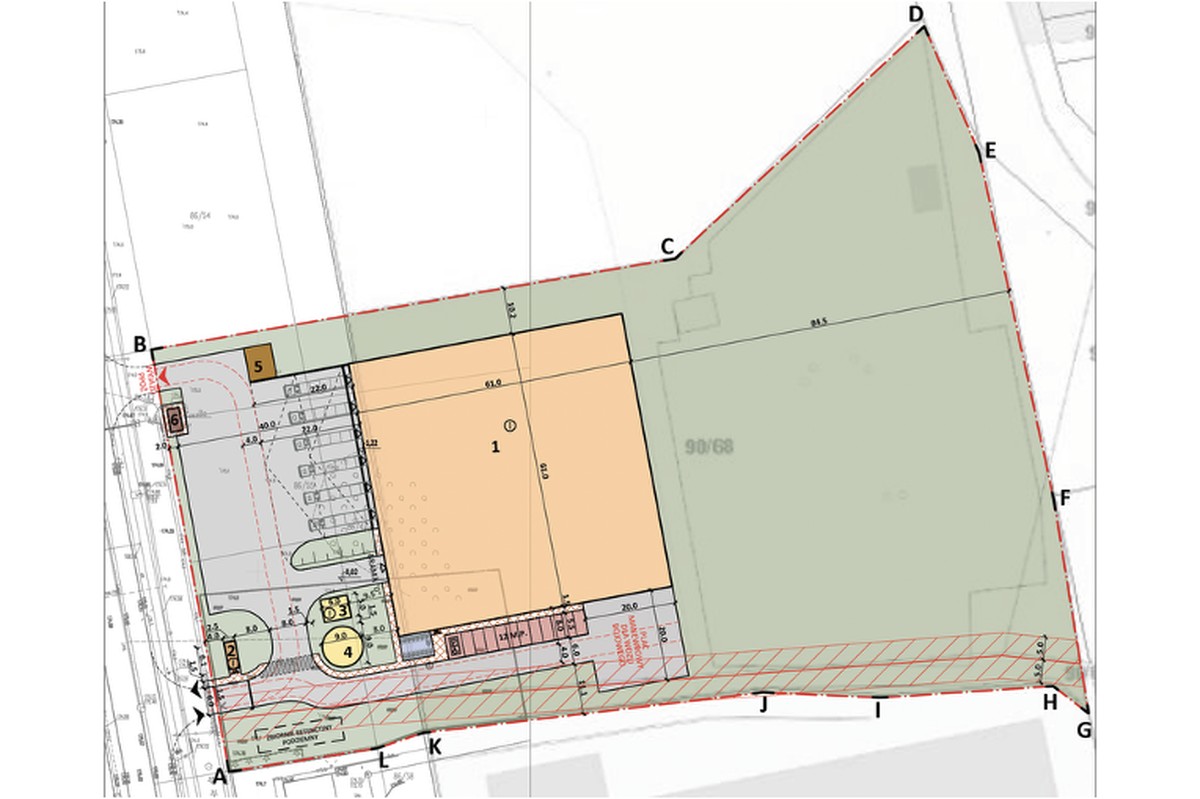
What the land can legally and physically carry, how much of it, and what stands in the way — before anyone commits money to it.
Industrial buildings & warehouses
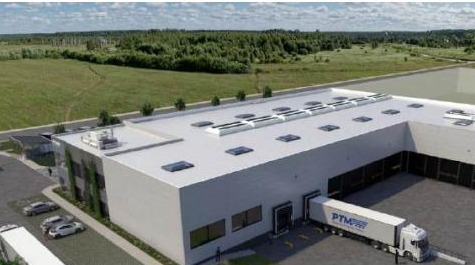
Halls, production plants and logistics centres, with the road layout, manoeuvring yards, utilities and the office and welfare part.
Consents & permits
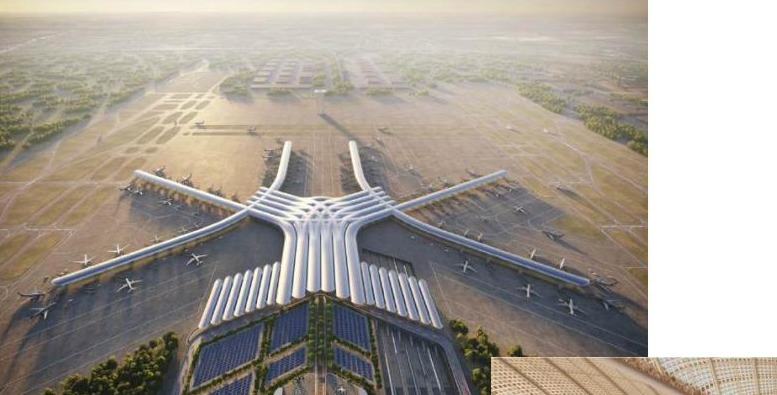
Environmental decisions, grid connection conditions, building permits. In this segment the schedule is decided by procedure, not by walls.
In Europe we run the procedure ourselves. Outside Europe we do not — we prepare the material the procedure needs and hand it to your local partner, who files it and carries it.
CAPEX / OPEX analysis
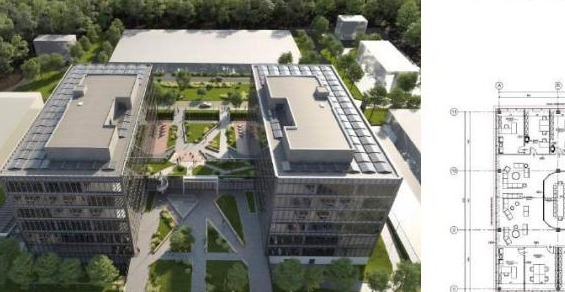
Investment and operating costs in variants, so the choice between two technical solutions is made on numbers.
Blue-green infrastructure
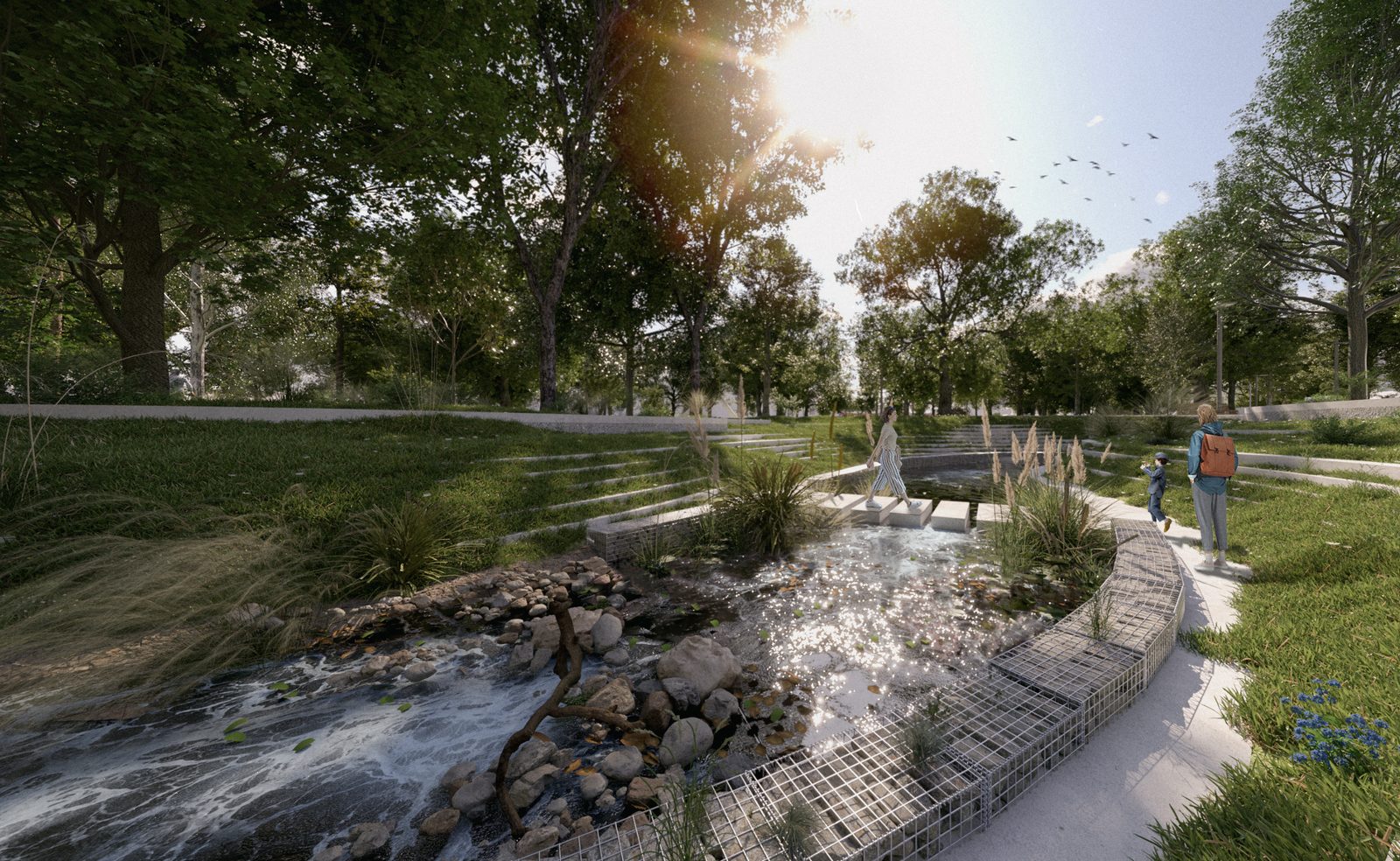
Retention, greenery and heat management on the site. We work to the ecohydrology principles of the UNESCO-auspiced centre and ERCE PAN.
Track record
Who we have built for
Developers, industry, public institutions and universities in Central Europe — including a Japanese manufacturer that built its first plant outside Asia here.
- Ghelamco
- HB Reavis
- Echo Investment
- Skanska
- Deloitte
- Veolia
- City of Łódź
- KOKI (Japan)
KOKI — an industrial plant for a Japanese client
A Tokyo manufacturer of soldering materials for the electronics industry chose our region for its first production plant outside Asia. Around 5,000 m², in operation since 2019.
We did the site and capacity study, the building design and the permit procedure, and the detailed design. Execution was carried out by contractors on site.
Why we bring this up in Osaka
Because we have already been on the other side of this exact conversation: a Japanese head office, a European site, two sets of standards and two ways of documenting a decision. That part is not learned from a brochure.
And because it answers the only question that matters — has anyone actually done it. Yes, and the plant has been producing for seven years.
Fuzja, Łódź
A former power-plant quarter turned into a mixed-use district. Developer: Echo Investment. In 2025 it won two MIPIM Awards in Cannes. We worked on it.
Łódź Fabryczna
The underground railway station and interchange at the centre of the largest transport investment in the city's history. We worked on it.
Where we show up
Since 2015 we have taken part in 28 international property and construction events in 10 countries on three continents — MIPIM in Cannes and EXPO REAL in Munich seven times each, plus BATIMAT, Futurebuild, Batibouw, Bygg Reis Deg and Expo 2025 in Osaka. We also travel as part of the delegation on the economic missions of the Polish Chamber of Commerce: Nigeria, Zimbabwe and South Africa, Mozambique. In 2025 we sat in the Polish delegation to the European Parliament of Enterprises in Brussels.
This is why a conversation with us does not start with explaining how a foreign market works. See the full record, year by year →
And at home
We are part of the local community and have spent years helping to build it. We organise the events that hold the regional business community together: mountain hikes for company owners, an annual entrepreneurs' ball, a business mixer for the city's 600th anniversary, Business & Walk city walks, a business breakfast at MIPIM in Cannes, the LodzArte Foundation we co-founded, and the projects #BuildingBridges and #WeBuildThisCity.
We also take an active part in the institutions that shape the direction of the city, the region and the Polish construction industry: the Council of Łódź University of Technology, the Council for Innovation and Development of its Faculty of Civil Engineering, the City of Łódź Revitalisation Committee, the Polish Chamber of Construction and the construction committee of the Polish Chamber of Commerce.
It matters more than it looks: you would be working with a practice that is accountable to the place it comes from. More about this (in Polish).
Global Startup EXPO 2026
Let's talk while we are both in Osaka
Tell us what you are building and how much space it will need. Even a rough answer is enough to say something useful — and if the answer is “we don't know yet”, that is exactly the moment to ask.
- Event
- Global Startup EXPO 2026
- Where
- Osaka, 5–7 October 2026
- Phone / WhatsApp
- +48 502 59 69 32
- partnership@bzbprojekt.com
- Website
- www.bzbprojekt.com